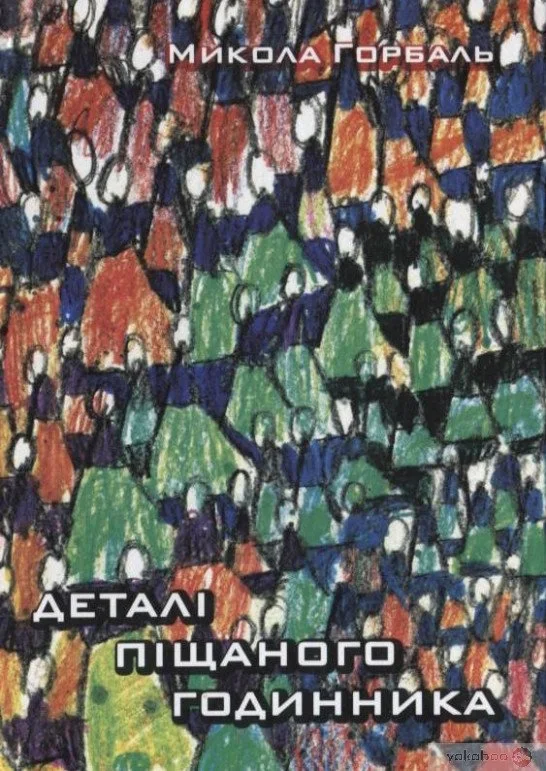
Details of an Hourglass

2021, Translation-in-Progress Grant Recipient

Details of an Hourglass 
«Деталі піщаного годинника»  

Author: Mykola Horbal
Translator: Myroslava Stefaniuk
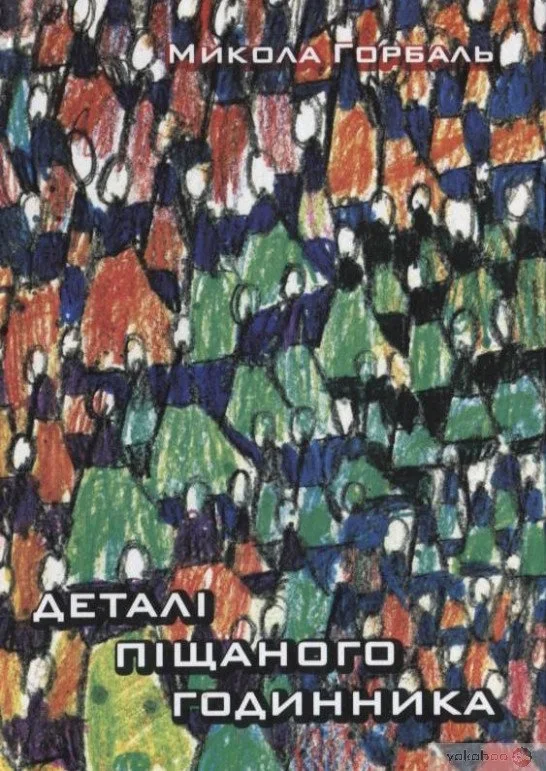
About the project: This is a translation of poems and song lyrics written by Mykola Horbal — a poet, musician, and human rights activist, who was repressed by the totalitarian Soviet regime and imprisoned three times in the Gulag for “anti-Soviet agitation and propaganda.” Relatively unknown outside of Ukraine, Horbal’s poems, published in Ukraine in 2008, are a unique example of creativity and fortitude in captivity and deserve their rightful place among the writings that laid the foundations for the modern Ukrainian national renaissance and independence, and paved the way for contemporary Ukrainian literature. 

As a political prisoner, Horbal spent sixteen years in the camps of the Soviet Gulag, where he suffered harsh labour, deprivation, and humiliation. His miniature poem-reflections chronicle this anti-world. The verses are brief and terse with multi-layered metaphors. Alongside anger, emptiness, irony, and absurdity, the poet juxtaposes beauty, hope and faith. Horbal describes his cruel reality as a “freeing spiritual journey”. He distances himself from falsehood, servility, and despair, by seeking solace and peace in his inner world, in universal truths, nature and in God’s grace. 

While the old Soviet system has collapsed, this collection of poetry shows the reader that bearing witness to that past is vital, because repression of human rights continues, using subtle and sophisticated methods. Horbal’s poetry is an aphoristic testament to his belief that you can imprison the body but not the human spirit.
Awards Archive

Decommunization in Ukraine

2021, Translation-in-Progress Grant Recipient

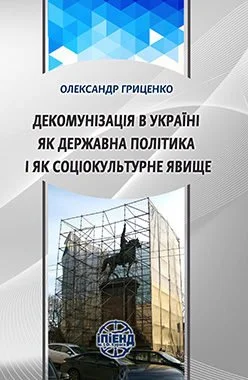
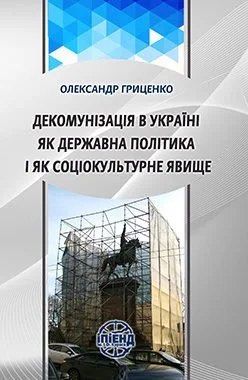
Decommunization in Ukraine as a Public Policy 
and a Cultural Phenomenon
«Декомунізація в Україні як державна політика і як соціокультурне явище»

Author: Oleksandr Hrytsenko 
Translator: Ksenia Maryniak

About the project: Originally published in 2019 by the Kuras Institute of Political and Ethnic Studies of the National Academy of Sciences of Ukraine, Oleksandr Hrytsenko’s monograph is rich in both primary and secondary sources, providing a broad and comprehensive view of Ukraine’s politics of decommunization in the context of social, political, and cultural transformations in the post-totalitarian and, in some respects, postcolonial country. As a leading Ukrainian expert on cultural politics and the politics of memory, history, and shifting societal values, norms, and attitudes, he is fully aware of the many controversies surrounding the topic and keeps a delicate balance of academic impartiality. The publication of this English edition detailing Ukraine’s “decommunization” process, will be the first exhaustive study in the West in book form.

Awards Archive

Eternal Calendar

2021, Translation-in-Progress Grant Recipient

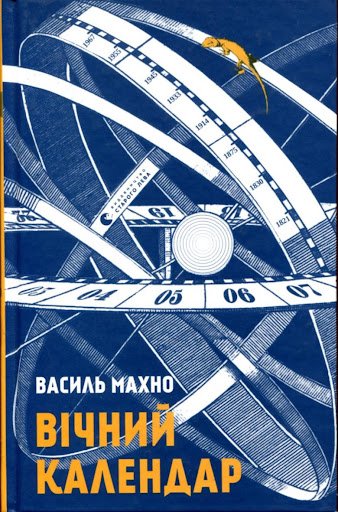
Eternal Calendar «Вічний календар»

Author: Vasyl Makhno
Translator: Ali Kinsella

About the project: With narratives that move back and forth from the 17th century to the present, Vasyl Makhno’s Eternal Calendar layers local, Ukrainian history onto global histories. Various ethnic groups come together and interact in the delineated space of a small town in what the author calls the “Brownian motion of history.” Through the Barevych and Wolanski families (and eventually the resettled Mekhamets), Eternal Calendar turns a lens to the uninterrupted multiculturalism of Western Ukraine’s Galicia. Over the course of the novel, the region experiences every manner of foreign occupation: from Ottoman rule, to Austria-Hungary, interwar Poland, the Soviet Union, and ultimately independent Ukraine. In some respects, it is the village of Mytnytsia that becomes the main character, welcoming a host of visitors. By focusing on one corner of the earth, while moving from the year 5426 since the creation of the world, to the middle of WWI, to the end of Stalinism, Makhno takes the concept of linear time, jumbles it up, and lays it back on top of itself. The effect is to make the reader consider space and time in new ways, not as an endless progression from one point to another, but in a fractured way that is closer to real memory and experience. 

Eternal Calendar was the winner of the 2020 Encounter: Ukrainian-Jewish Literary Prize.

Awards Archive

Voices of Babyn Yar

2021, Translation-in-Progress Grant Recipient

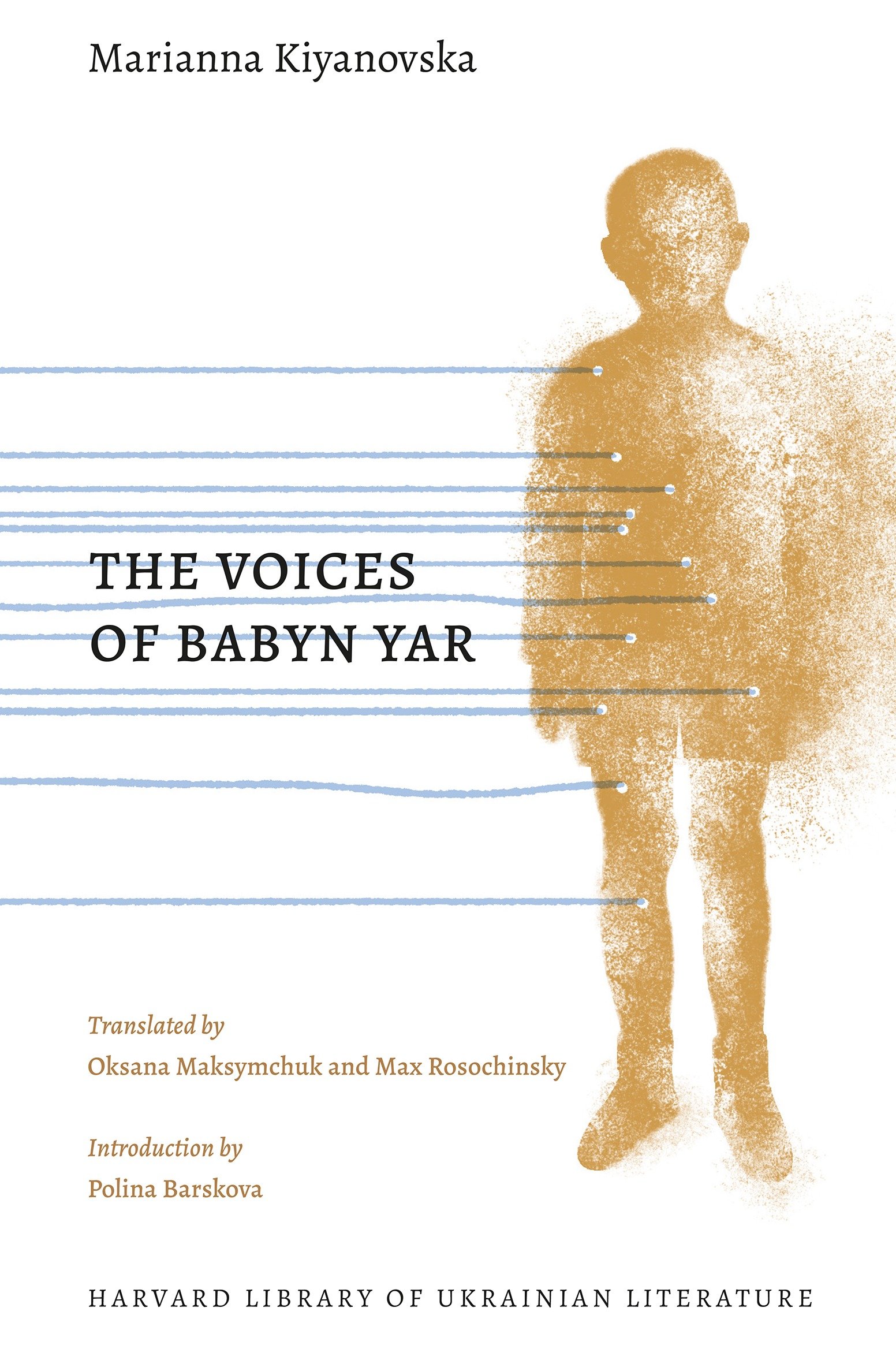
Voices of Babyn Yar «Бабин Яр. Голосами»

Author: Marianna Kiyanovska
Translators: Oksana Maksymchuk, Max Rosochynsky

About the project: This is a translation of Marianna Kiyanovska’s book of poetry The Voices of Babyn Yar, which was awarded Ukraine’s highest literary state prize in 2020, the Shevchenko National Prize for Literature. Originally published in Kyiv by Dukh i Litera in 2017, the book represents the first stand-alone volume of translations of Kiyanovska’s poetry into the English language. It is the first book-length attempt by a Ukrainian poet to honor the victims of the Holocaust in Ukraine. Artful and carefully intoned, the poems present what ordinary civilians experienced from a first-person perspective to an effect that is simultaneously immersive and estranging. It memorializes the experiences of members of a group betrayed by the larger community of which they are part, abandoned by the state, and failed by institutions. Conceived as a tribute to the fallen, the book also raises challenging questions about memory, responsibility, and honoring those who witnessed an unbearable evil.

The book is expected to be published by the Ukrainian Research Institute at Harvard University in 2022.

Awards Archive